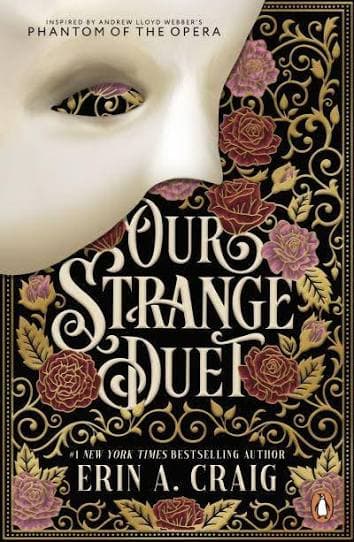
He's here! The Phantom of the Opera! New York Times bestselling author Erin A. Craig (HOUSE OF SALT AND SORROWS) sits down with us to talk about her newest book OUR STRANGE DUET, a retelling of the The Phantom of the Opera from ingenue Christine Daae's perspective. Is Phantom a ghost story? Did that chandelier actually fall and kill people? We talk about that and Erin's true ghost stories from her time working in another palatial theatre in downtown Memphis famous for its own legendary specter. Our Strange Duet hits bookshelves September 1!
Support this podcast on Patreon! Follow us on Instagram. You have a story tell us at youcanseemeinthedark@gmail.com
visit our website!
[00:00:00] Before we get started with today's episode, we want to thank our Patreon subscribers. Salinda, Angela, Sarah B, Novel Narrative, Corey, Shay, Nicola, Natasha, Mary, Amanda, David, and Teresa. Your help makes this show happen and we are so thankful for your support. You too can become a Patreon member. Members get early access to episodes and exclusive bonus content only heard there.
[00:00:28] Other ways you can support the podcast is leaving us a 5-star rating and a review. Or send us your stories. Pitch us your creepy encounters at youcenseemeinthedark at gmail.com. Melissa's debut novel, The Sisters of Crimson House, comes out on September 29th. If you pre-ordered the book, let us know and we'll give you an extra shout out on a future episode. Alright, on with the show.
[00:01:04] I'm Melissa Sweazy. And I'm Nate Reisman, and this is You Can See Me in the Dark. We're doing something a little different today. You might have heard this song before. That's right. The Phantom of the Opera. The centuries-old tale of a ghostly figure, but very real man, who haunts the underground tunnels of the Paris Opera House
[00:01:33] and vies for the heart of Ingenue Christine Daaé. The story was written as a novel by Gaston Leroux in 1910 and was adapted into the monster hit musical we all know and love. Did I make it my entire personality in 1989 after I was lucky enough to see the stage production with Michael Crawford? You know I did.
[00:02:00] And now we have our strange duet, a YA novel that is out in bookstores next month that tells the tale of the Phantom from Christine's perspective. We had the huge honor to sit down with author Erin Craig, who's going to tell us all about her introduction to the Phantom and her own ghost stories while working as a stage manager for Opera Memphis. But first, a ghost story. Well, two of them.
[00:02:30] The Paris Opera House is known as the Palais Garnier, an insanely over-the-top gorgeous structure in the 9th arrondissement of Paris. Construction finished in 1875 for Emperor Napoleon III. Two years earlier, the original opera house burned, killing a ballerina and disfiguring her beloved husband, a pianist who was close to the stage when the fire erupted.
[00:03:00] Legend has it that he fled to the nearby Palais Garnier and hid in the massive labyrinth underneath the building as construction was being completed. Those tunnels where the Phantom fairies Christine and a little skiff along the water, that is very real. If it's all smoky and romantic like it is in the book and film adaptations, is another matter entirely. And here is something else I didn't know.
[00:03:28] The central love story of the Phantom and Christine and Raoul, it was inspired by one, if not two, different love triangles. The one more pertinent to our story is the one of two ballet dancers. A man named Juan Maison and his lover Nanine d'Oroval, who fell in love, but Nanine caught the eye of a sergeant who competed for her affections and won. Brokenhearted, Juan Maison requested that when he died,
[00:03:58] his bones should be interred underneath the Paris opera house. If that wasn't enough, the big moment at the end of Act One when the massive chandelier comes crashing down after the Phantom has rigged it to try and kill Christine for falling in love with someone else. Also true. The chandelier did fall in 1897. One person died, 17 people were injured. Was it at the hands of a maniacally masked murderer?
[00:04:26] Or did Gaston Leroux just have a ton of material to work with that was truly stranger than fiction? Erin Craig is the next author who gets to put her spin on the story of Christine and the Phantom. Erin is the New York Times bestselling author of The House of Salt and Sorrow, a gothic retelling of the Twelve Dancing Princesses, and many other novels. Our Strange Duet is her latest, and it seems destined
[00:04:55] that a woman who spent many years toiling away as the stage manager for many operas would one day find herself at the center of the story about the most famous opera house of all time. Erin talks about ghosts, literal and fictional, including the one we know around Memphis as Mary, who happens to live in another famous theater in downtown Memphis. You Can See Me in the Dark presents Erin.
[00:05:48] When did Phantom come across your radar? Like, tell me about that experience for you. So I was in eighth grade band class, and I was like, to set the scene, I was like, not a theater kid at all at that point in my life. I was a basketball player. I'm 6'1", for podcast friends. And so I, and I grew up in Lubbock, Texas, like right after Cheryl Swoops won, you know, the national championship for Texas Tech. So like, I was a basketball girl through and through. Like, that was, I was going to,
[00:06:18] the WNBA did not exist yet, but it, I would join the NBA. It would be great. That was, that was going to be my last track. And then one fateful day, we were, I played the trumpet really terribly in band class. And our teacher, Mr. Slider, he was passing out this like Phantom of the Opera Melody Suite. And I was like, what is this? And he started telling us kind of the story of it and everything. And he was like, all right, let's sight read, you know, this. And it starts with the overture.
[00:06:45] And the first time we played those chords, I was like, oh my gosh, what is this? I need to know everything about this. I want to know the whole musical, the story, like the whole score, like everything for it. I finally convinced my parents to take us to Toronto to go see the show at Pantages Theater. When it was playing, they had a long extended sit down there. And I remember like hearing the overture played by actual professionals,
[00:07:15] not junior high musicians. And I was like, I want to do this for the rest of my life. I don't know how, I don't sing. I don't act like no one needs to see any version of that. But I want to be somehow a part of this. And so my, one of my friends, he was always in like the high school musicals and everything. He was like, oh, you should try out. And I was like, I don't really like to perform. And he was like, you should join one crew. And I was like, what is that?
[00:07:43] And so he started telling me about like the backstage world and everything. And I started out just like on the, you know, all of these super weird organizational life hacks. And so I was like, oh, this is,
[00:08:12] this is what I'm supposed to do. And so I went to the university of Michigan for stage management. And then we met in Memphis, you know, many years later. And, but I worked all over for musicals and opera companies. And I had a short stint with the Rockettes. So the radio city. And then after I had tiny Craig, I was like, you know, newborns and opera sopranos don't really mix well. And so we, you know, took the,
[00:08:41] my husband said like, you know, she's only going to be a little this once just staying with her and be a stay at home mom until like she goes to kindergarten and like go back to theater and do all that then. And so that's what the plan was. And then about nine months into stay at home mom-ness, I was just, I'm, I like to work. I like that becomes kind of my identity in life is whatever job I'm doing at the moment. And so I started kind of like picking, I'd always liked writing,
[00:09:09] but never really thought I would make a career of it or anything professional. You know, I wrote tons of fan fiction in college and high school and everything. And, but I was like, what if I did like a retelling and tried to like make it a book and like try to get an agent and do, you know, get published and everything. And so at that point I thought like, okay. And then, you know, all, all of the, the writing stuff happened at house of salt and thorough sold. And, uh,
[00:09:37] now we're on book six or seven or eight. I don't know where we're in the application process at this point. There's books everywhere. Um, but they, uh, but I thought like, Oh, like, like obviously theater, you know, has gone one way and the writing track has taken me on another. And then my, my editor one day, um, about two years ago, I guess now she texted me and she was like, do you like fan of the opera? It was like, well, yes, I do.
[00:10:05] And just proceeded to like blast her with a bunch of text messages. And she was like, okay, cool. And I was like, what does this mean? Like, what is happening? And so we found out, um, a couple of weeks later that, uh, Lloyd Webber entertainment, they're running to, you know, create this celebration of, of the phantom's 40th anniversary. And so they commissioned, uh, what became our strange duet. They wanted to do a YA version of Phantom of Andrew's Phantom of the Opera.
[00:10:33] And then there's this just insanely gorgeous coffee table book, um, that has stuff from the cast and the crew across like all the, the last couple of decades of Phantom. Um, I wrote a letter for like the next generation of stuff and like the, where, where Phantom is going, um, with our strange duet and masquerade in New York and all these kind of lovely revival moments happening. And so it's just been like, it's like a lovely kind of full circle of everything,
[00:11:03] like coming back to theater, coming back to Ray, like kind of merging the two and everything. And definitely was never anything I ever thought to pipe dream. And it's, it's the coolest one that you could ever have. Would you consider Phantom of the Opera a ghost story? I think the musical, uh, more so than like the, the Leroux novel, it could be a ghost story. It's not, not in like the traditional,
[00:11:32] like Phantom of the Opera, the opera ghost is a ghost. He's not, he's, he's living, he's very much alive and killing others. Um, but I think, I think Christine is so haunted by the ghost of her father that we never actually see, but she, she at one point does think that, you know, Phantom of the Opera is her father's ghost. There's definitely musings and, you know, deep thoughts on what grief does and how it shapes our lives and everything. And I think that like, even if it's not like a,
[00:12:02] you know, a spooky ghost poking you or anything like chains and rattles and white sheets and everything, just the specter of her father, even though we never see him, I think he shapes so much of what her reasons for everything are, why she does what she does, why she chooses to believe that the strange man behind the mirror is talking to her, her father at one point. I think it's a ghost story. It's a ghost story without a ghost. If that makes any sense at all.
[00:12:37] So our strange duet is a retelling and a celebration of Andrew Ludwig's fan of the opera, the musical very different than the Louvre novel. Um, but it is told exclusively through Christine Dye's perspective. And so for the very first time we get to see all of the plots and stories and the scenes and everything from the musical that we know and love, but we actually get to see it through Christine's eyes. And normally in the musical, you know, all of, even though she's at the very core of the story, the scenes tend to happen around her.
[00:13:07] Um, and so this is the first time I feel like she's got full agency of her story and we're hearing her side, her perspective, all of her emotional angst and dilemmas and everything from her perspective. And how did it feel? I mean, speaking of ghosts, uh, I mean, she's like, she's such a famous literary character, but she's so haunted. And what did it feel to get to look through the world through her eyes, through her perspective? It was like a trip. Um, because it is like, I,
[00:13:37] I, you know, I've been in love with this show since I was 13 and I, the, you know, 13 year old Aaron had very different thoughts about Christine and, and then, you know, several, many years later, Aaron. And so like trying to nail her voice, especially if it be in full pun intended. Um, she's an opera singer, so she's got voice, but like trying to get into her headspace and like, find out who she is, how she speaks, how she thinks and everything. It took me like an entire notebook before I had it right.
[00:14:07] Like I kept writing all these scenes and I was like, okay, well like here's the opera, you know, rehearsal. Here's the first music lesson, but it never really felt entirely right. And it was, I was, I felt like I was kind of like channeling just like generic Gothic. At the opera. And then I, when I met with Andrew, uh, we had a weekend in New York and we were talking through like all of these different little tiny silly bits about her life and, um,
[00:14:37] who she was, who her father was, what her life before, you know, any of the, the Paris opera stuff started. It's kind of started to come together of like who she was and everything. And then when I was writing one scene, we had talked about like when her father dies, we decided she was, she was in Paris at the time. She was blessedly with the juries, their family friends. And there's a moment where, uh, that I was writing the backstory for, for her. And they're at the funeral and Madame Jury says, okay,
[00:15:07] what's next? Like your, your dad's dead, your mom's dead. You have no massive inheritance to live off of. Like, what are you going to do with your life? And she offers to take her under her wing, um, and start enrolling her, you know, at the ballet Academy and teach her how to be a dancer. Maybe she'll be good enough that she could, you know, eventually work at the opera house as a dancer. And it, it occurred to me, like, as I was writing that scene, like that's who Christine is. She could have said, I'm going to go be a shop assistant or,
[00:15:37] you know, a flower girl or sell matches on the street or, you know, become a French prostitute, whatever, whatever one does in the 1890s France. But she decided to become a performer. And, um, she wasn't a ballet dancer. Like that's such a weird, like specific choice to make. Like when you don't have that background in dance, you don't have the background of performing arts. Your father was a musician. So like the world is familiar, but like she herself was not trained in any of this.
[00:16:04] And so to take the arguably much more difficult path of becoming, you know, this chorus, uh, ballet dancer, the course of ballet, suddenly that informed everything for me. And that was kind of like unlocking that key. Like she had that spark of ambition before we see anything happen, you know, in the musical later on and all the scenes we know. And that kind of was like that. Aha, that's who Christine is. And I suddenly everything made sense to me. And I had her voice after that.
[00:16:32] And it was a lovely moment of discovery. I want to go back a few years into that part of your life when you were a stage manager and when you were in Memphis. And so you were literally behind the scenes. I mean,
[00:17:00] I think that's another thing I want to emphasize, like just how amazing your story dovetails with you becoming the person who gets to write this book. You being behind the scenes of opera, like getting to know on a firsthand basis, like just all the backstage machinations and the divas, the attitudes, you know, just the stuff that like, it's like equally as, you know, bombastic behind the scenes as it is on stage. But ultimately,
[00:17:30] this is a ghost story podcast. So I want to get us to this, to this part of the story. You're in Memphis. You are literally in the dark backstage. You have your hand in everything. You're stage managing. When, if ever, did you encounter any ghosts? Oh gosh. So it was my very first production with opera Memphis.
[00:17:58] I was the assistant stage manager and it was at the Orpheum Theater downtown, which, what a great theater. Like, it's just so beautiful and wonderful. And you just feel like the history, every time you walk, you know, on stage, you just, you're so immersed by like Memphis and the history and the, the pomp and circumstance of, of every production that has ever come before. And I was just loving, you know, being, being there. And it was my first time in Memphis.
[00:18:27] It was my first like experience. I had been in Michigan for a very long time at that point. And so it was my first time experiencing Memphis, how hot Memphis could get in January. And I remember I was upstairs. We were doing a production of Trovatore and we were getting ready. It was like the first dress rehearsal that night. And so there's upstairs, there's the big, you know, chorus dressing rooms. There's the, the girls and the guys rooms.
[00:18:55] And I was in the men's chorus dressing room. It's Trovatore. So they've got like these huge suits of armor things that they're wearing. They're all the big plastic, you know, armor pieces and stuff that the soldiers wear at times. And they're hanging down like a Z rack in the middle of the room. It's a really long, narrow room, but there's mirrors on either side. And I was putting up, you know, all the,
[00:19:24] the chorus guys name tags. So they'd have their stations because they were going to be coming in for the first time that night. And as I'm looking in the mirror, you know, taping someone's name, I catch this glimpse of something in the background and all of the costumes have just started to like, it looked like someone's hand had gone across down the aisle and they all just kind of start swinging in a very serpentine thing. But it just looked like someone had gone straight down and it's January. There's no windows open.
[00:19:54] All the windows are painted shut upstairs at that point. There's no AC going on. It was hot and sweaty and disgusting. And there's like zero air movement. It was just one of those really awful, humid days. I just remember like, what the heck is moving that? Cause it literally, it just looked like a hand had just kind of traced it down. And I was like, put the last one up and I darted out of the room as quickly as I could. And I had, you know, my hair was up in a bun.
[00:20:24] I had a bunch of pencils and Sharpies and stuff stuck in my bun. And I remember feeling someone like shove the pencil out and it hit the floor and I heard it. And I was just like, Nope, not going for it as fast as I could. And I went downstairs and all of the crew guys were coming back from their lunch break. And I remember one of the props guys was like, Oh, you don't look good. What happened? And I was like, I need to explain. I was like, it's just something started moving the costumes.
[00:20:53] And he's like, Oh, that's Mary. And I was like, who is Mary? And he said, she's a little girl who lives at the Orpheum. And I'm like, there was nobody else in the room with me. And he was like, no, no, she's dead. I was like, this, this makes lots of sense. Yes. But he said, he said, I don't know. She was a, I think eight or nine year old girl who had seen a vaudeville performance, you know, in the 1920s, went outside the Orpheum, got hit by a trolley.
[00:21:21] They brought her back into the theater and she died there. And apparently now still helps the theater to the point where there's, there's a, it's very Phantom of the Opera. There's a seat that they will not sell because depending on who you ask, it's either Mary's seat or there's a lighting boom there. But we actually did get a photo of Mary. I wish I had it. One of the lighting designers years later, we were doing a production of Faust and I was,
[00:21:50] I was the ASM again on it. And I was on stage light walking, which is where, you know, you don't waste time. They offer singers time. So a lot of like the light cues and everything get built before the singers come in during tech rehearsals. And so they use the assistant stage managers or any intern who happens to be free at the time. It's okay. I stand in place as they light the scenes around them. And you, you pretend to be, you know, the singer and everything. And I remember I was on stage and I was reading a book because it is kind of boring.
[00:22:20] And I was reading Joe Hill's, a heart shaped box, which is terrifying in itself. And then all of a sudden the lighting designer shifts freaking out. And you can just kind of barely see everybody at the tech table because you've got all these spotlights, you know, shining down on you and they're all sitting in far away in the dark. And I remember hearing like a click of the camera and they caught, they saw movement in Mary's box and they caught, you see like the box, there's the lighting boom.
[00:22:47] And then there's this weird squiggle and it looks just like a human profile. Like she's sitting in her box in her seat watching my really terrible light walking. And I remember seeing that photo and I just, even now I still get chills thinking about it. Like it was like, you could see the little nose, the little crook of the mouth and everything. And it looked like a little tiny girl chilling in a theater box. Erin, I, okay.
[00:23:15] I have never in my life, we've been doing this show eight years. Obviously, Mary has come up before. She is a, it's probably the most famous ghost in, in terms of, of Memphis hauntings, Memphis. Absolutely. Um, I've never had anyone tell a story that had proof that had like, there was always the like, well, I, you know, you know what's haunted, but like you actually encountered Mary.
[00:23:46] She's very playful. And the, all of the crew guys, I love the stars. You should, you need to interview them. I at C69. Yay. Um, but they've got so many stories about, she loves to play prank fun, like props get moved around. It's very, you know, theater superstition. Like, I feel like she's a very good theater ghost. She does all the things she's supposed to do. I love that so much. Cause to your point, it's like every theater has a ghost, right?
[00:24:16] So I think there's just this kind of built in and some, sure. It was Mary. Sure. It's a Mary, but, um, I don't know. You're making me reconsider this for the first time. I, um, I'm going to say like, I feel like it's a little, um, a little bit of a betrayal to say that maybe I didn't fully believe in Mary, but you might've made a believer out of me. Yay. She's my favorite of all ghosts. Pretty great.
[00:24:52] A big thank you to Aaron for sharing her story and a huge congrats on the book. Our strange duet hits bookshelves September 1st.